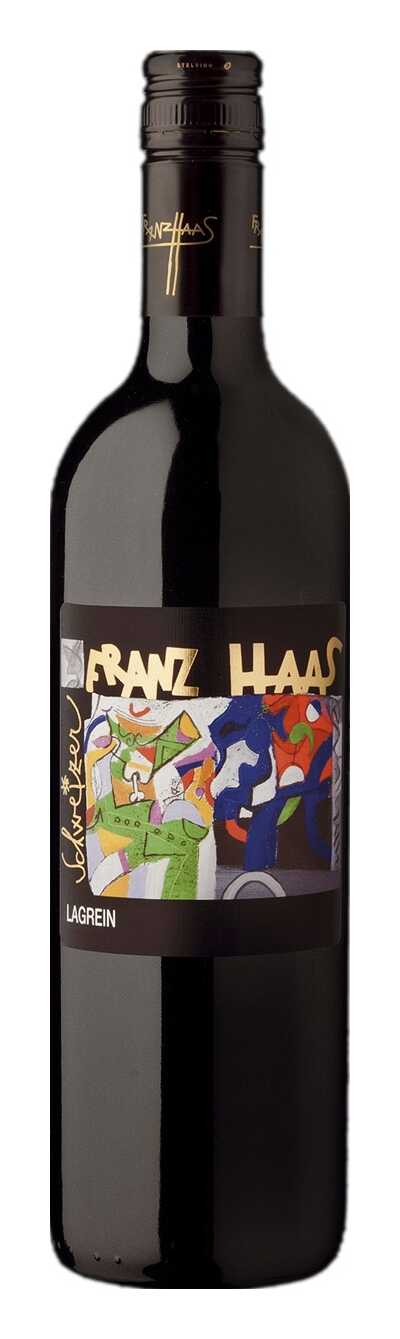
Lagrein DOC FRANZ HAAS
| Sommelier score | 91/100 | 2026 |

| Winery | FRANZ HAAS |
| Denomination | Alto Adige Doc |
| Vintage | 2024 |
| Grapes | 100% Lagrein |
| Alcohol content | 13,50% |
| Cl | 75cl |
| Sulfites | Contains sulphites |
| Winery headquarter | FRANZ HAAS - Montagna (BZ) - Via Villa, 6 |
| Bottle size | Standard bottle |
| Combination | Cold cuts and salami, Lamb, Polenta taragna, Pizzoccheri, Medium-aged cheeses, White Meat, Risotto, Grilled Pork, Cockerel grilled, Grilled meat |
| Region | Trentino-Alto Adige (Italy) |
| Style | Medium-bodied and fragrant |
| Wine list | Lagrein |
| Dichiarazione Nutrizionale, Ingredienti e Raccolta differenziata | Visualizza le informazioni nutrizionali |
Franz Haas' Lagrein originates from vineyards located in sunny areas of South Tyrol, between approximately 220 and 250 meters above sea level, on alluvial soils rich in gravel. The south and south-west exposures allow a complete ripening of this late grape variety, essential for obtaining aromatic concentration and phenolic maturity. After manual harvesting, the grapes are gently destemmed and fermented in open vats. During maceration, moderate remounts are adopted to avoid excessive tannic extraction. At the end of fermentation, the wine is transferred to tonneau where it undergoes malolactic fermentation and matures for approximately 10–12 months, followed by further aging in the bottle before marketing.
Characteristics of this South Tyrolean wine
It appears with a deep, intense red color, sometimes with purple reflections in younger years. The olfactory profile is broad and complex, with notes of ripe red fruits, violet, sweet spices and hints that recall cocoa and fresh grass. In the mouth it is decided and structured, with an important but velvety tannic texture. The sip is full and enveloping, supported by a good freshness that balances its power. The finish is long, savoury and persistent, with spicy and fruity returns.
Recommended pairings with this Franz Haas red wine
Lagrein pairs well with rich and structured dishes, especially grilled red meats, roasts, braised meats and game, as well as aged cheeses and savoury preparations of traditional cuisine. Its tannic structure and aromatic intensity make it ideal for dishes with great personality. The recommended serving temperature is between 16 and 18°C, an optimal condition for expressing balance between the fruity component, the tannic structure and the softness of the sip.
![SAN VINCENZO [ANSELMI]](https://data.negoziodelvino.it/imgprodotto/san-vincenzo_11828_ico.jpg "SAN VINCENZO [ANSELMI]")
![Lugana PIEVECROCE DOC [COSTARIPA MATTIA VEZZOLA]](https://data.negoziodelvino.it/imgprodotto/lugana-pievecroce-doc_17031_ico.jpg "Lugana PIEVECROCE DOC [COSTARIPA MATTIA VEZZOLA]")
![Collio Ribolla Gialla DOC BIO [GRADIS'CIUTTA]](https://data.negoziodelvino.it/imgprodotto/collio-ribolla-gialla-doc-bio_16755_ico.jpg "Collio Ribolla Gialla DOC BIO [GRADIS'CIUTTA]")
![Etna Bianco ERSE DOC [TENUTA DI FESSINA]](https://data.negoziodelvino.it/imgprodotto/etna-bianco-erse-doc_17588_ico.jpg "Etna Bianco ERSE DOC [TENUTA DI FESSINA]")
![Prosecco DOC Extra Dry WHITE [BOTTEGA]](https://data.negoziodelvino.it/imgprodotto/prosecco-doc-extra-dry-white_17282_ico.jpg "Prosecco DOC Extra Dry WHITE [BOTTEGA]")
![Pinot Grigio DOC [CANTINA PUIATTI]](https://data.negoziodelvino.it/imgprodotto/pinot-grigio-doc_16992_ico.jpg "Pinot Grigio DOC [CANTINA PUIATTI]")
![Refosco dal Peduncolo Rosso [Volpe Pasini]](https://data.negoziodelvino.it/imgprodotto/refosco-dal-peduncolo-rosso_17147_ico.jpg "Refosco dal Peduncolo Rosso [Volpe Pasini]")
![Gavi Cortem DOCG [FONTANAFREDDA]](https://data.negoziodelvino.it/imgprodotto/gavi-cortem-docg_16122_ico.jpg "Gavi Cortem DOCG [FONTANAFREDDA]")
![Alghero Cagnulari Riserva RECONTA DOC [CANTINA SANTA MARIA LA PALMA]](https://data.negoziodelvino.it/imgprodotto/alghero-cagnulari-riserva-reconta-doc_16573_ico.jpg "Alghero Cagnulari Riserva RECONTA DOC [CANTINA SANTA MARIA LA PALMA]")
![Pinot Nero SCHWEIZER DOC [FRANZ HAAS]](https://data.negoziodelvino.it/imgprodotto/pinot-nero-schweizer-doc_16374_ico.jpg "Pinot Nero SCHWEIZER DOC [FRANZ HAAS]")
![Prosecco Extra Dry DOC in a Box [BOCELLI 1831]](/images/noimage_ico.png "Prosecco Extra Dry DOC in a Box [BOCELLI 1831]")
![Verdeca Salento VERAMORE [DUE PALME]](https://data.negoziodelvino.it/imgprodotto/verdeca-salento-veramore_15947_ico.jpg "Verdeca Salento VERAMORE [DUE PALME]")