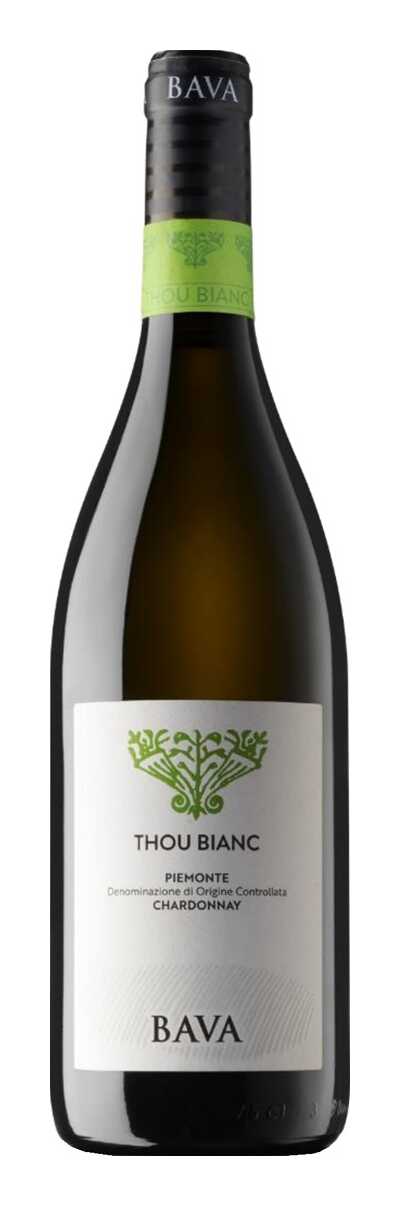
Chardonnay Piemonte THOU BIANC DOC BAVA
| Sommelier score | 91/100 | 2026 |
| Winery | BAVA |
| Denomination | Piemonte Doc |
| Vintage | 2024 |
| Grapes | 94% Chardonnay, 6% Timorasso |
| Alcohol content | 13,00% |
| Cl | 75cl |
| Sulfites | Contains sulphites |
| Winery headquarter | BAVA - Cocconato (AT) - Strada Monferrato, 2 |
| Bottle size | Standard bottle |
| Combination | Sea bass, Fresh cheese, Crustaceans, White Meat, Chicken nuggets, Octopus salad, Linguine in squid ink, wild game, Risotto with seafood |
| Region | Piedmont (Italy) |
| Style | Light and fresh |
| Wine list | Chardonnay |
| Dichiarazione Nutrizionale, Ingredienti e Raccolta differenziata | Visualizza le informazioni nutrizionali |
The production of Thou Bianc Piemonte DOC Chardonnay is based on a winemaking process designed to preserve freshness, aromatic finesse and varietal character. The 100% Chardonnay grapes, grown in the Bricco della Pieve vineyard (Cocconato, Monferrato) on limestone soils rich in white marl (thou bianc), are harvested and vinified separately to ensure the correct level of technological and phenolic ripeness. After the harvest, the process continues with: soft pressing of the whole grapes, to limit the extraction of bitter and oxidative compounds, followed by cold static settling of the must to promote natural clarification. Alcoholic fermentation is initiated at a controlled temperature (~18 °C) in stainless steel tanks: malolactic fermentation is not carried out, a technical choice that preserves acidity and gustatory tension. The final stage of ageing ‘sur lies’ takes place in stainless steel for around 6 months, with the wine remaining on the fine lees to enhance volume and aromatic complexity. No oak is used: the wine is produced exclusively in stainless steel to preserve varietal expression and the minerality of the terroir.
Characteristics of this Piedmont wine
Visually, it has a bright straw-yellow colour, sometimes with greenish hues in the younger vintages, which gradually take on a golden hue as the wine ages in the bottle. On the nose, the bouquet is clean and complex, with medium but well-defined intensity. The primary aromas are dominated by floral notes of white flowers such as acacia and lime blossom, accompanied by hints of orange blossom and orange peel. The fruity component is equally evident, expressing itself through hints of banana, ripe apple and yellow-fleshed fruit. With a little aeration, softer, honeyed hints also emerge, helping to enrich the aromatic complexity and reflect the limestone-marl nature of the terroir. On the palate, the wine is dry, with a medium-light structure well-balanced by a marked acidity, a fundamental element that underpins its overall balance. The taste is made more harmonious by a subtle mineral savouriness, which directly evokes the soils of its origin. The palate is clean, linear and consistent with the bouquet, with an elegant finish and good aromatic persistence, leaving a fresh and slightly fruity aftertaste.
Recommended pairings for this Chardonnay from Cantina Bava
In the kitchen, it finds its ideal balance with fish dishes, particularly those with a medium body and a certain aromatic delicacy, such as baked or grilled fish, or light dishes served with subtle sauces. It pairs equally well with vegetable-based pasta dishes or risottos, where the creaminess of the dish is balanced by the wine’s freshness. White meats, cooked simply or with mild seasonings, also make a good pairing, as they help maintain the balance between the dish’s structure and the wine’s finesse. Finally, it can accompany fresh or lightly matured cheeses, where its acidity helps cleanse the palate without overpowering the flavours of the dish. Serve at a temperature of 10–12°C.
![Pinot Grigio GRIVÒ DOC [Volpe Pasini]](https://data.negoziodelvino.it/imgprodotto/pinot-grigio-grivò-doc_17140_ico.jpg "Pinot Grigio GRIVÒ DOC [Volpe Pasini]")
![Garda Classico Rosso "Negresco" DOC [Cà Maiol]](https://data.negoziodelvino.it/imgprodotto/garda-classico-rosso-negresco-doc_15602_ico.jpg "Garda Classico Rosso \"Negresco\" DOC [Cà Maiol]")
![Secco Original Vintage Edition [Bertani]](https://data.negoziodelvino.it/imgprodotto/secco-original-vintage-edition_11213_ico.jpg "Secco Original Vintage Edition [Bertani]")
![Pinot Grigio "Borgo Tesis" DOC [Fantinel]](https://data.negoziodelvino.it/imgprodotto/pinot-grigio-borgo-tesis-doc_13265_ico.jpg "Pinot Grigio \"Borgo Tesis\" DOC [Fantinel]")
![Chianti Classico Riserva LODOLAIO DOCG [CASTELVECCHI]](https://data.negoziodelvino.it/imgprodotto/chianti-classico-riserva-lodolaio-docg_16642_ico.jpg "Chianti Classico Riserva LODOLAIO DOCG [CASTELVECCHI]")
![Barbera dell'Oltrepò Pavese VIGNA PREDA DOC [VANZINI]](https://data.negoziodelvino.it/imgprodotto/barbera-delloltrepò-pavese-vigna-preda-doc_16685_ico.jpg "Barbera dell'Oltrepò Pavese VIGNA PREDA DOC [VANZINI]")
![Barolo Chinato PERIN [CONTERNO FANTINO]](https://data.negoziodelvino.it/imgprodotto/barolo-chinato-perin_16522_ico.jpg "Barolo Chinato PERIN [CONTERNO FANTINO]")
![Valtènesi Rosè MOLMENTI DOC [COSTARIPA MATTIA VEZZOLA]](https://data.negoziodelvino.it/imgprodotto/valtènesi-rosè-molmenti-doc_17028_ico.jpg "Valtènesi Rosè MOLMENTI DOC [COSTARIPA MATTIA VEZZOLA]")
![Nizza Riserva LA LUNA EI FALÒ DOCG [VITE COLTE]](https://data.negoziodelvino.it/imgprodotto/nizza-riserva-la-luna-ei-falò-docg_16703_ico.jpg "Nizza Riserva LA LUNA EI FALÒ DOCG [VITE COLTE]")
![Brunello di Montalcino DOCG [Tenuta Brunelli Martoccia]](https://data.negoziodelvino.it/imgprodotto/brunello-di-montalcino-docg_8034_ico.jpg "Brunello di Montalcino DOCG [Tenuta Brunelli Martoccia]")
![Spumante Ribolla Gialla Brut [Fantinel]](https://data.negoziodelvino.it/imgprodotto/spumante-ribolla-gialla-brut_13273_ico.jpg "Spumante Ribolla Gialla Brut [Fantinel]")
![Trebbiano d'Abruzzo DI VERTO DOC [TORRE DEI BEATI]](https://data.negoziodelvino.it/imgprodotto/trebbiano-dabruzzo-di-verto-doc_17556_ico.jpg "Trebbiano d'Abruzzo DI VERTO DOC [TORRE DEI BEATI]")