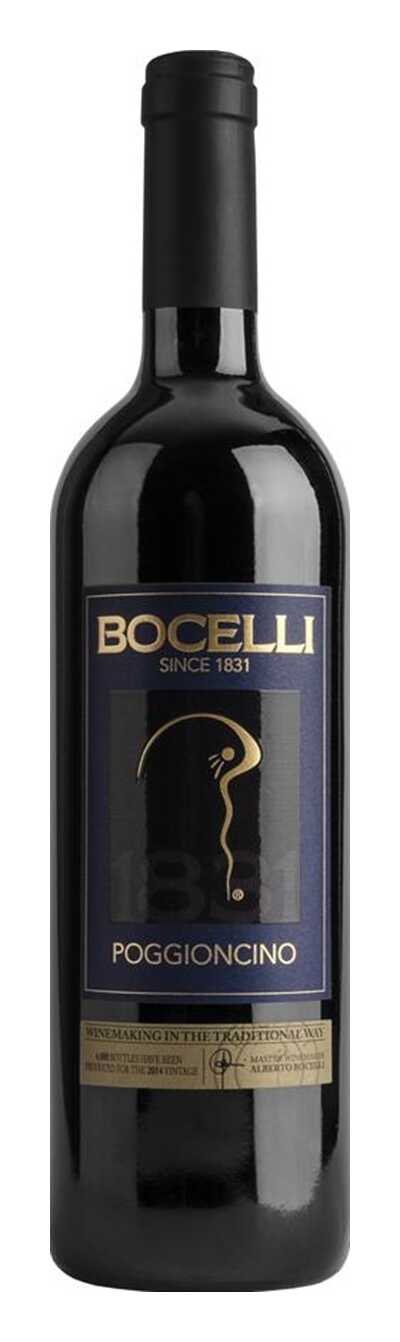
Toscana Rosso POGGIONCINO BOCELLI 1831
| Sommelier score | 92/100 | 2026 |

| Winery | BOCELLI 1831 |
| Denomination | Toscana Igt |
| Vintage | 2022 |
| Grapes | 60% Sangiovese, 20% Canaiolo, 10% Cabernet Sauvignon, 10% Malvasia |
| Alcohol content | 14,00% |
| Cl | 75cl |
| Sulfites | Contains sulphites |
| Winery headquarter | BOCELLI 1831 - Lajatico (PI) - Strada Prov. per Lajatico 4 |
| Bottle size | Standard bottle |
| Combination | Medium-aged cheeses, Grilled Pork, Cockerel grilled, Pizzoccheri, mushroom risotto, Cannelloni, Meat and game stew, Scallops with mushrooms |
| Region | Tuscany (Italy) |
| Style | Medium-bodied and fragrant |
| Wine list | Toscana Igt |
Poggioncino Rosso di Toscana IGT is a red wine produced in Tuscany by the Bocelli 1831 company, in the Lajatico area, in the province of Pisa. It is a wine designed to represent a classic yet accessible style of Tuscan tradition, with a modern setting and good drinkability. It is born from a blend of Sangiovese grapes mainly, alongside Canaiolo, Cabernet Sauvignon and a small part of Malvasia Bianca, grown on medium-textured soils. Winemaking takes place in temperature-controlled steel to preserve the fruity component and freshness of the wine, while aging takes place for approximately 12 months in second-passage French oak barriques, followed by a further aging period in the bottle of approximately six months.
Characteristics of this Tuscan wine
On organoleptic examination it appears with a medium intensity ruby red colour, with slightly purplish reflections. On the nose it is elegant and immediate, with hints of cherry, ripe red fruits and small berries, accompanied by spicy notes of black pepper and herbaceous nuances such as sage. On the mouth, it is balanced, soft and medium-bodied, with well-integrated tannins and good flow; the finish is pleasantly fruity and persistent, with a return of spicy sensations.
Recommended pairings with this red wine from Cantina Bocelli 1831
Suitable for traditional Tuscan dishes and more. It pairs well with grilled meats, ribs, first courses with meat sauces, cured meats, and aged cheeses, but can also be eaten in simpler, more everyday contexts thanks to its softness and immediacy. The ideal service temperature is around 18 °C.
![Brunello di Montalcino RISERVA 2019 DOCG [CAPARZO]](https://data.negoziodelvino.it/imgprodotto/brunello-di-montalcino-riserva-2019-docg_14304_ico.jpg "Brunello di Montalcino RISERVA 2019 DOCG [CAPARZO]")
![Franciacorta Extra Brut Cuvée Prestige 48 Edizione In Box [Ca del Bosco]](https://data.negoziodelvino.it/imgprodotto/franciacorta-extra-brut-cuvée-prestige-48-edizione-in-box_9064_ico.jpg "Franciacorta Extra Brut Cuvée Prestige 48 Edizione In Box [Ca del Bosco]")
![Spumante Metodo Classico Extra Brut Rosè de Noirs [CANTINA PUIATTI]](https://data.negoziodelvino.it/imgprodotto/spumante-metodo-classico-extra-brut-rosè-de-noirs_16987_ico.jpg "Spumante Metodo Classico Extra Brut Rosè de Noirs [CANTINA PUIATTI]")
![Spumante Lugana Brut CÉPAGE [LE MORETTE]](https://data.negoziodelvino.it/imgprodotto/spumante-lugana-brut-cépage_16793_ico.jpg "Spumante Lugana Brut CÉPAGE [LE MORETTE]")
![Brunello di Montalcino DOCG 2020 [Famiglia Falorni]](https://data.negoziodelvino.it/imgprodotto/brunello-di-montalcino-docg-2020_16286_ico.jpg "Brunello di Montalcino DOCG 2020 [Famiglia Falorni]")